Showing posts with label ferns. Show all posts

Tuesday, May 14, 2013

Strawberry Hill Farms, Part 1

Over the weekend, Scott and I went to a farm so I could get one plant (on which I will report later). I told him we'd only be there five minutes, but this farm is a huge plant vendor with several warehouses full of fruits, vegetables, and ornamentals. We were there longer than five minutes. I had to wander around and take pictures, of course.

Speaking of which, the camera I'm using now is Scott's, so many thanks are due.

Anyway, people come from all over the state to go to this farm and get plants, so we had to park a good walk away from the cluster of buildings. As we approached them, this was the first thing we saw: discounted cole crops! I think these were marked down to $2 for a four-pack.


I've never seen so many petunias, or in so many colors. There were several rows of tables like this scattered around, covered in petunias. I had to water petunias regularly as a child, and I've never been a fan. They're too sticky for me, and they need to be deadheaded all the time. That said, they are nice to look at.


Here are some tables of salvia and marigolds. I love purple and yellow together, though I don't know if I like how marigolds smell. I'm going to get some next year regardless to put around my tomatoes (assuming I grow tomatoes again next year).


Here's just a section of one of the greenhouses containing ornamental hanging baskets. There was so much to see--I could have spent days wandering around and perusing the selection.


They even have a variety of ferns!


These were the only coleus I saw, but they're nothing to shake a stick at. Sadly I did not have time to sniff all these varieties to find out which were sweet-smelling. Those are my favorites.


Here's a great spider plant. I hope mine gets this full someday.


This begonia looks like a looking-glass begonia, only with polka dots. I don't know what would go well with this plant, but it's impressive on its own.


Now, this is what I came for: a purple shamrock. The species was not denoted on the tags, but I believe these are Oxalis regnelli 'Charmed Wine'. The one I ended up purchasing is on the bottom left. Their leaves are slightly variegated, which is different from the individuals in the greenhouse.


A better shot of the leaves. They look like butterflies in person, too. Some of them were flowering, but people don't cultivate purple shamrocks for their flowers.


All these pictures don't encompass one-fiftieth of the plants at Strawberry Hill. It's truly amazing. Maybe that's why people flock from all over. It was plant overload on my brain, which is why the visit was so fun.

Next post: more views from Strawberry Hill.

Sunday, May 5, 2013

Devil's Icebox and Its Environs

Today I went with some kids from my dorm to Devil's Icebox, which is a cave, and some trails around it. I had a great time, and, naturally, I took a lot of pictures of plants.

First, though, check out this spinach I got. The greenhouse overwintered some of its spinach from last fall, and it began growing again this spring. The spinach soon bolted, though, so I was tasked with pulling it all. Even though it had flowered, the leaves tasted fine, so I was allowed to take home whatever I wanted. I took home a whole bagful, and gave a few plants each to two of my closest friends at school. Here's what I had left after that. It may not look like much, but there's real treasure in there. And lots of aphids and spiders, as it turns out.


Here's another photo unrelated to my cave trip. I saw this on my way to my car this morning and couldn't resist photographing it.


The cave pictured here is not the one we explored, but we did end up crossing this stream. I didn't take many pictures inside the cave because the bottom of it was a river, and I didn't want to drop my phone in it. However, some of my friends took quite a few pictures from in the cave, so I'll post them when I get them.


This plant is a wild Missouri edible, the mayapple (Podophyllum peltatum). These umbrella-like plants will produce apple-esque fruits later this year. The fruits are edible when cooked and can be incorporated in pies, jellies, and so forth. I've never eaten one, but I would like to.


I love mossy cliff faces. This one was quite impressive. The mud made it impossible to clamber over to that tree, though.


There was a plethora of wildflowers blooming at the state park we visited, and I didn't recognize any of them. There's a surprising but substantial difference in the ecologies of my native region and more northern regions of Missouri.


This is Devil's Icebox. This is the cave we explored. We did not, however, enter it this way.


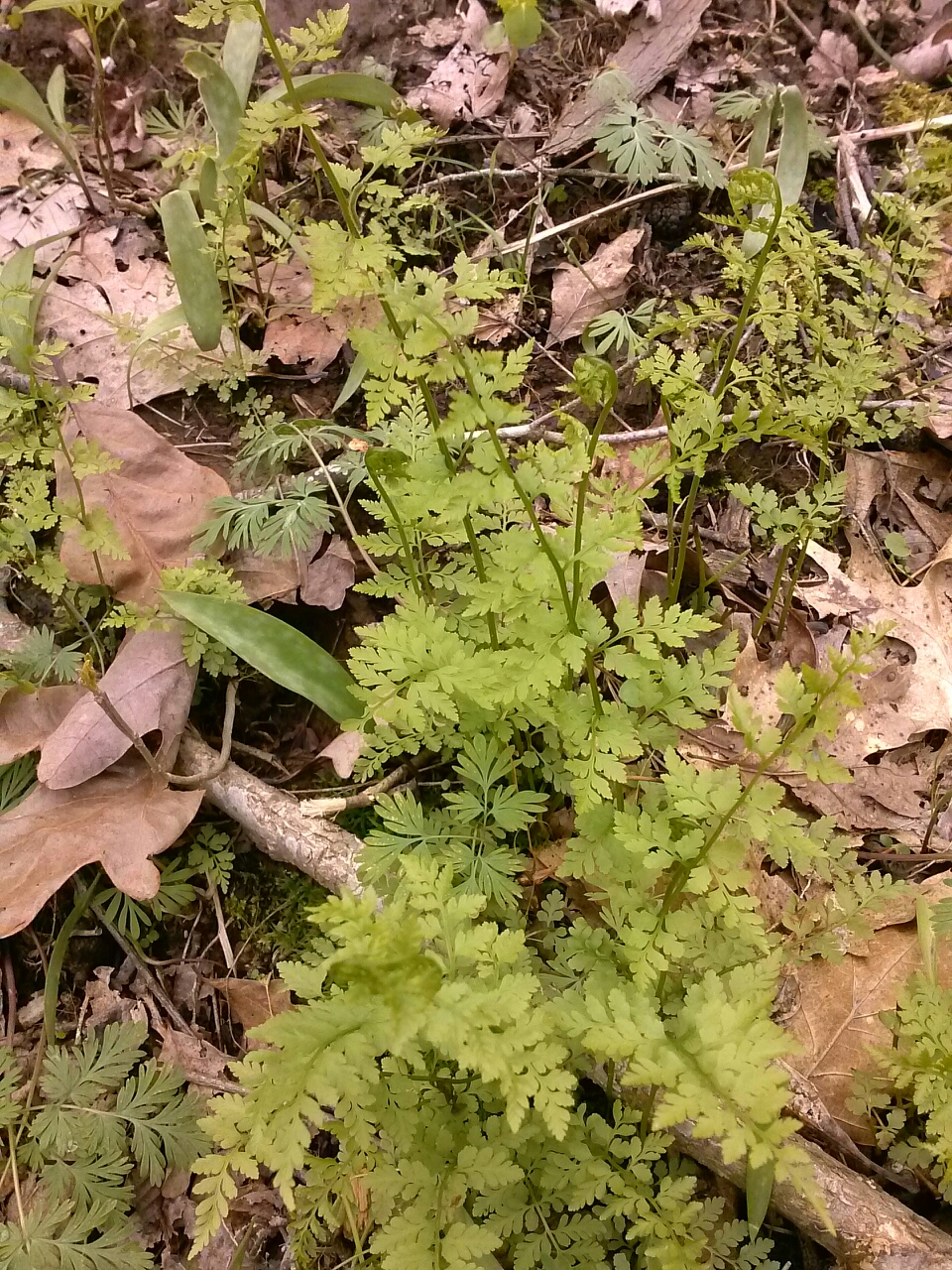
These ornate ferns were all over the place. I quite enjoyed them.


Another unfamiliar wildflower. These blooms resembled snapdragons, except that they weren't in spike formations.


These flowers look like they might belong to the Phlox genus.


Again, I hope to bring you some in-cave pictures. It was a great experience, exploring some of the area's natural wonders. What has nature created in your neck of the woods?

Next post: me in a cave?

Tuesday, April 30, 2013

Moonlight Garden

When I plan my future gardens, there are two objectives I keep in mind: form and function. I tend to favor function. There are tangible rewards for growing vegetables, fruits, edible flowers, and herbs. You can literally taste your success, which goes on to literally nourish your body, rather than just emitting an abstract sense of victory.

However, my eyes can be bigger than my stomach. I do have moments when I want a plant just for its looks. I love how my jade plant and spider plant look. I like five-color silverbeet in part for its five colors. So the wishlist moonlight garden I am about to describe is the culmination of those moments.

A moonlight garden is one in which plants with white or silver foliage or flowers are planted. The idea behind this is that the moon's rays reflect off the plants at night, leading to a glow-in-the-dark garden, perfect for evening parties or gatherings. I find this idea classy--all white flowers, lots of silvery leaves, all illuminating your guests as you entertain them in the dark of the night. It would be nice on quiet, lonesome nights too. A little surreal, maybe. At any rate, I want to try to create this kind of garden someday, and these are the plants I want to grow in it. As always with my plant lists, click on the hyperlinks to see a picture of the plant.

Iris germanica: Irises have always been some of my favorite flowers. Their elegant ruffles would fit in perfectly with the aesthetic of a moonlight garden. Which is to say, classic.

Hydrangea macrophylla 'White Ball': While most of my memories regarding hydrangeas come from my childhood vacations on Cape Cod, these beautiful bushes grow in my Midwestern hometown as well. Hydrangeas are fun as well as versatile. I don't know what pH level the soil needs to be for the flowers to be white rather than blue or pink, but the effect is worth it.

Convallaria magallis (Lily-of-the-valley): I was not familiar with these plants until this year. These are some of the sweetest flowers I've ever seen, and I would love to cultivate them someday.

Hellebore niger (White hellebore): Many of the plants on this list bloom a few feet off the ground. Irises grow atop tall inflorescences, and hydrangeas grow on sizeable bushes. Hellebores, however, grow close to the ground, so they would provide layering and depth to a moonlight garden. In addition, hellebores bloom in late winter and early spring, so they would provide white when most plants don't.

Salvia officinalis (Common sage): Writing about sage makes me happy since I already have a member of this species. My seedling's leaves are not yet pubescent, but someday they will be, and it's the pubescence (read: hair) that makes them silvery. The best part about using sage in a moonlight garden is that it provides form and function, as sage is a wonderful culinary herb.

Kalanchoe rhombopilosa: To switch things up a little bit, I'd like a white succulent in my moonlight garden. This Kalanchoe looks somewhat like an upright shelf fungus, and the entire plant (minus the flowers) is white and brown. This would, like the hellebores, give white color that's close to the ground. It would also provide a very different texture than most of the other plants.

Artemisia ludoviciana (Louisiana artemisia): This silvery bush has waist-high foliage, so the entire plant fits the "moonlight" ideal.

Senecio serpens (Blue chalksticks): Blue chalksticks are primarily ground cover, similar to the Kalanchoe. Some varieties look more blue or green than silver, but the silver ones are impressively so.

Cerastium 'Silver Carpet' (Snow in summer): This ground cover-y plant is, in one sense, the perfect plant for a moonlight garden. That's because snow in summer has both silver foliage and white flowers. Both are very pretty to boot!

Dichondra argentea 'Silver Falls' (Kidneyweed): As the cultivar name implies, kidneyweed is an ideal "spiller" plant for containers. It also makes excellent silver ground cover. A few pots of this have been growing at the greenhouse this spring, and it's a delight just to walk by them. They look even more silvery in person than in the photo.

Athyrium niponicum pictum (Japanese painted fern): I have a weak spot in my heart for ferns, and this one is no exception. Japanese painted ferns come in several colors, but most commonly seem to be silver with burgundy stems. This contrast would really liven up a moonlight garden and keep it from becoming a white-and-green monotony. Not to mention the fact that ferns like to bush out and take up some space.

Bonus: I'm going to go ahead and list Cylindropuntia echinocarpa (Silver cholla) with my moonlight garden selections. This cactus' spines are so incredibly white that a specimen would undoubtably go in this garden, should I end up living in a region that could support it. (And judging by the fact that I really want to live in the American southwest at some point, the inclusion of this plant seems likely.)

I realize that not all of these plants would grow in a single environment, so I will let my region dictate which I choose to grow. I would love to grow them all, though. You might notice I skipped over a couple of common choices for moonlight gardens. I have my reasons: lamb's ear is missing--this is because lamb's ear is incredibly invasive, and I prefer not to plant invasive species.

What combinations of these plants would you like to grow? Do you think a Japanese painted fern would look good next to irises? What about kidneyweed next to the Kalanchoe?

Next post: more views from around campus.

P.S. Thinking about it, Silver cholla would look really snazzy in a container with blue chalksticks and maybe some Senecio rowleyanus (string of pearls). The cholla would be the thriller, the chalksticks would fill in space, and the string of pearls would spill over. Perfect!

Thursday, April 11, 2013

Houseplants to Drool Over

If you haven't noticed by now, I like plants. Plants give us food, shelter, something nice to look at, and lots of other good stuff (oxygen, anyone?). So it's only natural that I would like to have plants living in my house, when I get a house. Thus, today I am posting about just a few of the indoor plants I would like.

Note: yes, I said I would post about forsythia. I'm a dirty liar. My excuse is that there was torrential rain all day here, and I didn't want to get my camera wet. If it's still blooming tomorrow, I will photograph it.

The first plant on this list is one I recently discovered: purple shamrock (Oxalis regnellii). I saw some of these at work, probably leftover from the campus florist's St. Patrick's Day stock. They're gorgeous plants--the leaves really do look like butterflies--so I had to look them up. As you can see from that picture, the flowers aren't too shabby either! A quick Google search for "purple houseplants" revealed that these were indeed shamrocks. What I'm wondering is if the individuals in the greenhouse could still be purchased...(If I was Twitter literate, I'd currently be saying #overrun by plants.)

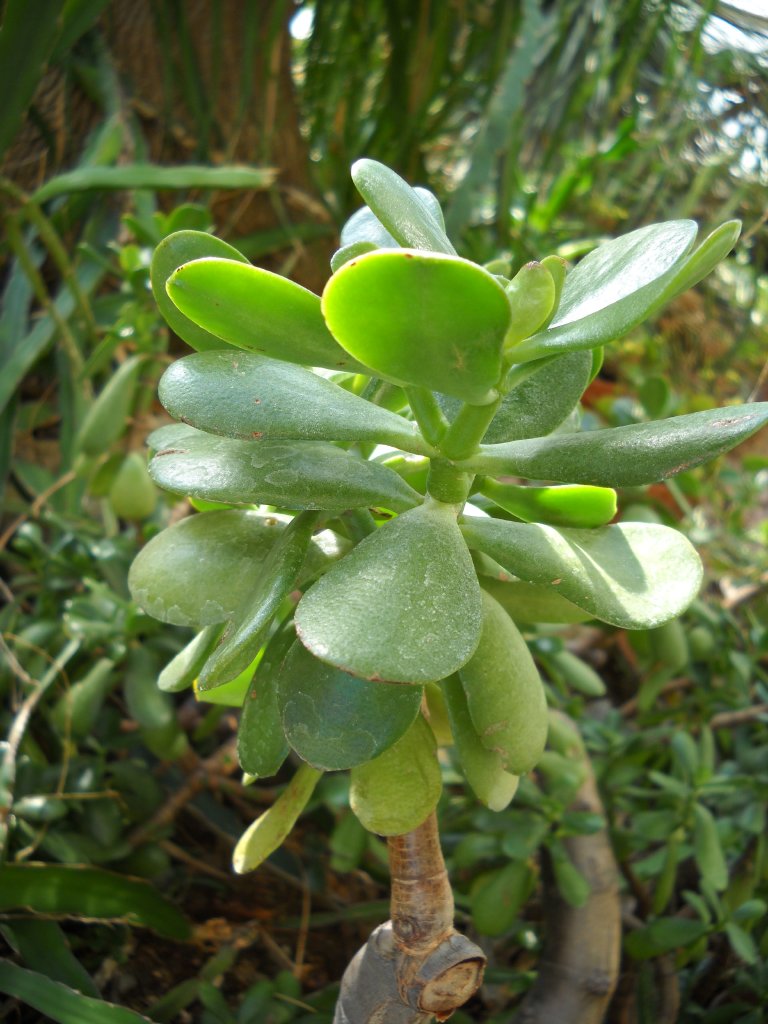
Next are a couple of plants I am fortunate enough to have already: the jade plant (Crassula ovate) and the spider plant (Chlorophytum comosum). These are two quintessential houseplants, and mine are faring wonderfully. I will keep them with me as long as I can.

Another discovery I made at work was the wandering jew (Zebrina pendula). This common houseplant also has the color purple going for it, and its foliage seems to shimmer, so I'm a fan.

I grew up with ferns, so it's only natural that I want one. Plus, they do a marvelous job of filtering the air in one's house. But rather than get a finnicky Boston fern that I have to mist, I'd like a birds nest fern (Asplenium nidus). These ferns get nice and big and lush, and they're originally epiphytic, so you can grow them in very shallow containers. Also, upon doing a bit of research, I just learned that these plants are edible! You can cook the young leaves (also known as fiddleheads) like you would any other vegetable. This is apparently common in Taiwan.

The last houseplant on my list (for now) is lucky bamboo (Dracaena sanderiana). Yes, this is corny and cliche, but I like how the things look, and they're easy to care for. So why not?

What are your favorite or most-wanted houseplants?

Next post: either forsythia or a container garden update.

Friday, March 15, 2013

University Greenhouse, Part VI: More Scenes from the Tropics

I was tempted to post on another topic today  (so badly tempted--you'll see why tomorrow), but since I promised more greenhouse pictures, here they are.

The first plant from this batch was grouped (as you can see) with a bunch of bromeliads, so I don't know if it's a bromeliad or not. Either way, its bloom was attractive.


My friend who accompanied me on this outing said she was only interested in flowers, not foliage, but even she was intrigued by the coloration on this plant. That's one wonderful thing about plants in general: they're so diverse that some species look like science fiction gone mad.

Has this plant been drinking blood from people's livestock? Or from people? I smell a Little Shop of Horrors sequel.
This next plant is a little sweeter. I don't know if this shot was taken pre-or-post-bloom, but it was pretty either way, and I bet it's dazzling when fully open.


Now comes the star of our show: Theobroma cacao. At first, when I saw this tree's football-shaped fruits, I thought perhaps it was a starfruit variant. I thought it very odd, though, that the fruits would hang right off the trunk instead of the tree's smaller branches.

To give these some sense of scale, each fruit is about as tall as a large man's hand, from the wrist to the fingertips. Meaning they're substantially bigger than my hands.

But then I saw this.


Theobroma = food of the gods. Cacao = cocoa. It's a chocolate tree. That moment was when I realized, once and for all, that I had picked the right university to attend. They have a vanilla plant and a chocolate tree in the same room. I'm a foodie in general, but I have about 30 wicked sweet teeth, so I was caught in a cross between foodie heaven and plant geek heaven. I still am, really. I also want to know who gets to keep these heavenly fruits, though it would take a lot of them (and a lot of time and money, too) to create much chocolate.

So now that I've gotten that out of my system, onto the next plant! This one's called Zambia furfura. Its base looks like a woody artichoke, but its foliage is really something to behold.


Plant rant time: the veins you see on these leaves are parallel and roughly equal in size. This means that our friend Zambia is monocotyledonous. Monocots are plants that only have one seed leaf. If you cut a cross section of one of their stems, the xylem and phloem will basically be distributed randomly throughout the width of the stem. In this case, this is relevant because the veining gives a distinctive, textured look to the leaves, which is what I like about them.


A few days ago, I showed a picture of a fern and briefly alluded to the method by which ferns reproduce (and the fact that ferns need moist environments to reproduce). Well, here's what ferns look like when they reproduce. Those clusters on the bottom of the leaves are called sori (sorus is the singular version). Sori release spores into the air. These spores are not seeds; they develop into a weird leaf-like structure called a prothallus. Prothalli develop male and female reproductive parts, and those allow fertilization to occur, producing an embryo. The embryos become the new fern, not the prothalli. However, this can only happen when the prothalli are wet because fern sperm is considered "swimming sperm," and it can't move except through water. That is why you'll find a lot of ferns in wet woodland areas rather than dusty, open plains. Man, that's two plant rants in a row!


Here's a break for your brain: I don't know what this plant is, but it grows in a spiral pattern, so it looks cool.


This unnamed plant is another of those that look so exotic to me that they seem extra-terrestrial. Alternatively, this plant would fit in on a seafloor.


I hope you enjoyed learning a bit more about plants (and seeing what chocolate fruits look like)! Have you ever thought a plant looked like it would be at home on another planet?

Next post: terribly exciting news!

Thursday, March 14, 2013

University Greenhouse, Part V: Tropical Nirvana

Today we're transitioning from the arid desert to a tropical oasis (literally, as the greenhouse has a room that's just a koi pond surrounded by aquatic and tropical plants). Enjoy your stay!

First up for today is part of a jade tree. This was still in the desert room. I planted a cutting of jade in one of my classes and might be bringing it home this week. They're beautiful, in my opinion. This one has some hard water stains on it but is still looking healthy.


I don't know what this white vine is, but it's neat! Also of note is the fact that I recently learned how white plants like this photosynthesize. Green plants have chlorophyll, which is the pigment that captures the sun's energy, but other pigments can do this as well. Carotenes are pigments that photosynthesize sugars for orange and some yellow plants, and xanthophylls do the same for some yellow and white (or "clear") plants. Anthocyanins are the pigments responsible for making plant tissues red or purple, but these are incapable of converting electromagnetic radiation into carbohydrates. So this plant must make its food via xanthophylls. There's your nerdy plant lesson for the day!


Now we've made it to the koi room. Yes there are real, live koi fish in it. You can see the pond in the background. This leaf is impressive.


This is why it's impressive.

That is a women's size 9 shoe. That leaf probably has more area than ten soles of that shoe. Eve could have stitched two together and been completely modest.
These leaves were similarly large and impressive, but even more interesting. I don't know how they develop those holes. Also, when taking this shot I was ripped from my immersion in the splendor by that SUV. You don't think about it while wandering about this magical plant playland, but there's a parking lot and a whole concrete world right outside.


This leaf too was intriguing. I wish more plants were labeled, but I think the person staffing this greenhouse has been tasked with identifying its residents. So they're working on it. Maybe I'll go back there in a few months and find more names to match all the beautiful faces (more like fronds).


Speaking of fronds, here's a fern! While ferns can survive and thrive in lots of different conditions (they're great houseplants, as they filter air superbly), they can only reproduce in continually moist environments. In tomorrow's post you'll get to see fern reproduction in action, and I'll rant geekily about why that only happens when there's lots of water around.


With this picture, we move into the last room of the greenhouse. This room is also kept at tropical temperature and humidity levels. It is home to two famous (infamous? nefarious? you decide) plants. This is the first: a member of the Orchidaceae (orchid) family that produces a long, slender bean pod containing vanilla beans. These are used to produce vanilla extract and those devilish iced frappucinos you can get at Starbucks. One vanilla bean pod sells for ten bucks in grocery stores, making me wonder who takes home the pods produced by this plant. It wasn't bearing fruit on this visit, but it was last fall.


There were a lot of orchids in this room, but only one was blooming. Their blooms just look fancy, so I can see why so many people enjoy cultivating them. Last time I went to this greenhouse, nearly all the orchids were in bloom. The smell was so intoxicating it almost knocked me over.


Also in this room were several bromeliads. This first one was larger and crazier than mine, and it's "rooted" in the tree behind it. Bromeliads are basically the only plants that don't need soil to live. I think those yellow stalks to the left are probably flowers by now.


Here are some tamer bromeliads that look a lot more like tillandsia, which is what I have. These were on the same bench as most of the orchids, which makes sense: you're supposed to fertilize bromeliads by mixing orchid fertilizer with water.


At this point, you may be asking yourself something along the lines of "Wait, she said there were TWO famous plants in this room, but she only talked about one!" This is true. The next celebrity plant is coming to you tomorrow, but in case you can't handle that much suspense, I'll give you a hint: its scientific name is Theobroma cacao And if you can't figure it out, you only have to wait until tomorrow.

Next post: Greenhouse Pictures: Tropical Oasis: Part II, featuring my special mystery guest Theobroma.