Showing posts with label greenhouse. Show all posts

Friday, April 12, 2013

Reaping the Benefits

Since the university's flower shop's cool-season plant sale is over, the greenhouse doesn't need its cool crops anymore. So I got to take some home today! Most of these are eating-size and will be eaten very shortly, so they won't be long-term additions to my plant addiction, but they're really cool and healthy and inspiring and yummy looking.

First is the broccoli (Brassica oleracea) plant. Broccoli really needs to be outside since you eat its flowers, so I'm going to give this one either to Scott's parents, my mom, or anyone else who could take care of it. Its foliage is pretty on its own, though.


This next plant, Lactuca sativa, should be familiar--it's lettuce! This cultivar is called 'Simpson Elite.' It looks soft, and I'm going to have some on a Jimmy John's sandwich tonight, so I'll report back on how it tasted then. I probably could get more out of these four plants by cultivating them, but I don't think the light conditions can support them for long.


This plant also Brassica oleracea, but it is better known as cabbage. This particular cabbage is an ornamental variety, but since it was never treated with pesticides, it's technically edible, so I'm going to eat it. There were non-ornamental varieties too, but they had fewer leaves. I reckon I could make a few servings of cole slaw with this.


Brassica oleracea is one of my favorite species of plants. This one species is amazingly diverse. Case in point: kale. This variety is ornamental in the same manner as the above cabbage, and it is also edible in the same manner. Kale, in my mind, is dismissed as a yuppie vegetable by many, but it cooks up just like spinach or collards, and it has impressive nutrition facts. Not surprisingly, kale's nutrition facts and broccoli's are very similar. Both have a low glycemic index; low fat and cholesterol; high fiber; high protein; high vitamin A, C, and K contents; and high iron contents. The biggest difference when comparing the two is their anti-inflammatory values. Kale is extremely anti-inflammatory; broccoli is only slightly so.


With all these new additions, my windowsill now looks like this:


And while I'm on the topic of my windowsill, here's an update on all my other plants. My thyme seedlings are starting to poke out their first true leaves, which is exciting. For a while I had wondered if they ever would. Oh, and this is as in-focus as the thyme is going to get--my camera just cannot handle objects this small.


Next are my spinach seedlings. They've developed their second sets of true leaves, which is good.


This might not scream Popeye right now, but someday...
My spider plant is looking about the same, but it seems significantly bigger than it was before. I think it enjoyed its stay at my house over spring break. These plants seem to tolerate low light just fine, but they don't really thrive in it.


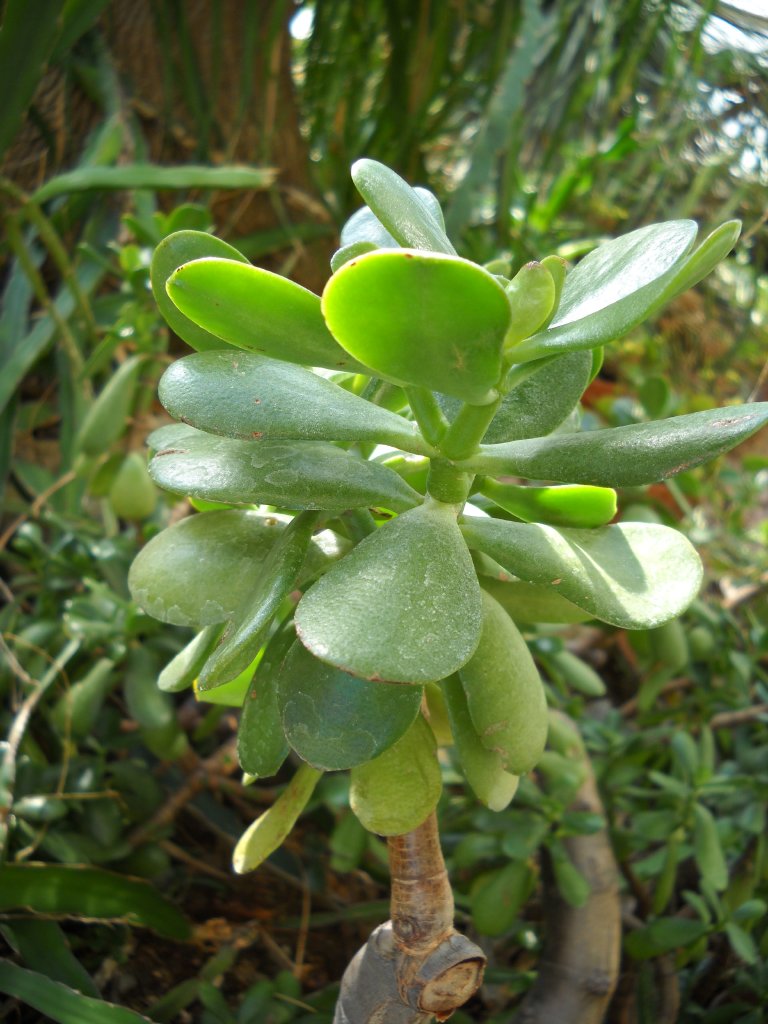
The jade plant is doing well also. This is just such a sleek plant.


Finally we've come to the Swiss chard. I moved it to my windowsill so it could get more light, which has seemed to help a couple of the seedlings. They're still droopy. On the positive side, most of them (despite the fact that I couldn't get a good picture of this) do have tiny dots that will become their first true leaves. Perhaps the increased surface area of these leaves will help the plants maximize what light they have?


A little bit of research suggests that Swiss chard does not like moving from where it was originally planted. That might contribute to these plants' middling performance. Next year I will be able to plant outside to begin with (in containers, but it's the light that matters), so that should help. In the meantime, I'll see if these go anywhere when I put them out for the summer.

In another bit of news, I might be able to get my plant-loving paws on a purple shamrock and a wandering jew, two of my coveted houseplants from yesterday's post. What's even better is that it looks like I'll be able to get one of those plants for free. More on that when more happens.

Next post: a brief spring favorite (for real this time).

Monday, March 25, 2013

University Greenhouse, Part VII: The Final Chapter

At last, we have made it to the end of the greenhouse adventure I had weeks ago. Don't worry--there are still some interesting specimens left to see. For example, today we start with an unnamed tropical plant with pink-tipped foliage. You don't see that everyday in the midwestern U.S. Also, note the healthy fern behind it.


Next we have Pellionia pulchra, also known as the watermelon vine. This plant has a most interesting combination: subdued colors and a lively pattern. Its purple stems are nearly as faded-looking as the leaves, but the venation attracts the eye and the attention, almost--you guessed it--like watermelons.


This leaf was unidentified, but I imagine it is some kind of fern. It was probably eighteen inches from one end to the other.


You can get an idea of how big these variegated leaves are from looking at the fern fronds below...


...or you can compare my hand to them!


This is another gargantuan leaf. It is as black in person as it appears in the photo. There are a few of these plants in the greenhouse where I work, so I water these weekly. They're pretty, but the size of the leaves makes them topheavy.


Here's another comparison photo for you.


More hot pink-accented foliage. You don't think of plants as being glamorous, but so many are. No wonder so many designs (in architecture, fashion, and etc--think of good china) are based on plants.


This is a shot of the underside of those leaves. The dark variegation on the top is pretty, sure, but the underside is funky too.


Next is the final flower of this greenhouse trip: a member of the Anthurium genus. These plants are sometimes known as "flamingo flowers" or "boy flowers," according to Wikipedia. I actually have one of these in my house, and it's blooming now, only its blooms are white. These are probably more typical, judging by the common name's reference to flamingos.


That ends my series of greenhouse pictures. I hope you've enjoyed the ride, and should I return to this greenhouse in the future, I will capture flowers and other interesting things that I may have missed my first time through.

Next post: my springtime hopes get smashed.

Friday, March 15, 2013

University Greenhouse, Part VI: More Scenes from the Tropics

I was tempted to post on another topic today  (so badly tempted--you'll see why tomorrow), but since I promised more greenhouse pictures, here they are.

The first plant from this batch was grouped (as you can see) with a bunch of bromeliads, so I don't know if it's a bromeliad or not. Either way, its bloom was attractive.


My friend who accompanied me on this outing said she was only interested in flowers, not foliage, but even she was intrigued by the coloration on this plant. That's one wonderful thing about plants in general: they're so diverse that some species look like science fiction gone mad.

Has this plant been drinking blood from people's livestock? Or from people? I smell a Little Shop of Horrors sequel.
This next plant is a little sweeter. I don't know if this shot was taken pre-or-post-bloom, but it was pretty either way, and I bet it's dazzling when fully open.


Now comes the star of our show: Theobroma cacao. At first, when I saw this tree's football-shaped fruits, I thought perhaps it was a starfruit variant. I thought it very odd, though, that the fruits would hang right off the trunk instead of the tree's smaller branches.

To give these some sense of scale, each fruit is about as tall as a large man's hand, from the wrist to the fingertips. Meaning they're substantially bigger than my hands.

But then I saw this.


Theobroma = food of the gods. Cacao = cocoa. It's a chocolate tree. That moment was when I realized, once and for all, that I had picked the right university to attend. They have a vanilla plant and a chocolate tree in the same room. I'm a foodie in general, but I have about 30 wicked sweet teeth, so I was caught in a cross between foodie heaven and plant geek heaven. I still am, really. I also want to know who gets to keep these heavenly fruits, though it would take a lot of them (and a lot of time and money, too) to create much chocolate.

So now that I've gotten that out of my system, onto the next plant! This one's called Zambia furfura. Its base looks like a woody artichoke, but its foliage is really something to behold.


Plant rant time: the veins you see on these leaves are parallel and roughly equal in size. This means that our friend Zambia is monocotyledonous. Monocots are plants that only have one seed leaf. If you cut a cross section of one of their stems, the xylem and phloem will basically be distributed randomly throughout the width of the stem. In this case, this is relevant because the veining gives a distinctive, textured look to the leaves, which is what I like about them.


A few days ago, I showed a picture of a fern and briefly alluded to the method by which ferns reproduce (and the fact that ferns need moist environments to reproduce). Well, here's what ferns look like when they reproduce. Those clusters on the bottom of the leaves are called sori (sorus is the singular version). Sori release spores into the air. These spores are not seeds; they develop into a weird leaf-like structure called a prothallus. Prothalli develop male and female reproductive parts, and those allow fertilization to occur, producing an embryo. The embryos become the new fern, not the prothalli. However, this can only happen when the prothalli are wet because fern sperm is considered "swimming sperm," and it can't move except through water. That is why you'll find a lot of ferns in wet woodland areas rather than dusty, open plains. Man, that's two plant rants in a row!


Here's a break for your brain: I don't know what this plant is, but it grows in a spiral pattern, so it looks cool.


This unnamed plant is another of those that look so exotic to me that they seem extra-terrestrial. Alternatively, this plant would fit in on a seafloor.


I hope you enjoyed learning a bit more about plants (and seeing what chocolate fruits look like)! Have you ever thought a plant looked like it would be at home on another planet?

Next post: terribly exciting news!

Thursday, March 14, 2013

University Greenhouse, Part V: Tropical Nirvana

Today we're transitioning from the arid desert to a tropical oasis (literally, as the greenhouse has a room that's just a koi pond surrounded by aquatic and tropical plants). Enjoy your stay!

First up for today is part of a jade tree. This was still in the desert room. I planted a cutting of jade in one of my classes and might be bringing it home this week. They're beautiful, in my opinion. This one has some hard water stains on it but is still looking healthy.


I don't know what this white vine is, but it's neat! Also of note is the fact that I recently learned how white plants like this photosynthesize. Green plants have chlorophyll, which is the pigment that captures the sun's energy, but other pigments can do this as well. Carotenes are pigments that photosynthesize sugars for orange and some yellow plants, and xanthophylls do the same for some yellow and white (or "clear") plants. Anthocyanins are the pigments responsible for making plant tissues red or purple, but these are incapable of converting electromagnetic radiation into carbohydrates. So this plant must make its food via xanthophylls. There's your nerdy plant lesson for the day!


Now we've made it to the koi room. Yes there are real, live koi fish in it. You can see the pond in the background. This leaf is impressive.


This is why it's impressive.

That is a women's size 9 shoe. That leaf probably has more area than ten soles of that shoe. Eve could have stitched two together and been completely modest.
These leaves were similarly large and impressive, but even more interesting. I don't know how they develop those holes. Also, when taking this shot I was ripped from my immersion in the splendor by that SUV. You don't think about it while wandering about this magical plant playland, but there's a parking lot and a whole concrete world right outside.


This leaf too was intriguing. I wish more plants were labeled, but I think the person staffing this greenhouse has been tasked with identifying its residents. So they're working on it. Maybe I'll go back there in a few months and find more names to match all the beautiful faces (more like fronds).


Speaking of fronds, here's a fern! While ferns can survive and thrive in lots of different conditions (they're great houseplants, as they filter air superbly), they can only reproduce in continually moist environments. In tomorrow's post you'll get to see fern reproduction in action, and I'll rant geekily about why that only happens when there's lots of water around.


With this picture, we move into the last room of the greenhouse. This room is also kept at tropical temperature and humidity levels. It is home to two famous (infamous? nefarious? you decide) plants. This is the first: a member of the Orchidaceae (orchid) family that produces a long, slender bean pod containing vanilla beans. These are used to produce vanilla extract and those devilish iced frappucinos you can get at Starbucks. One vanilla bean pod sells for ten bucks in grocery stores, making me wonder who takes home the pods produced by this plant. It wasn't bearing fruit on this visit, but it was last fall.


There were a lot of orchids in this room, but only one was blooming. Their blooms just look fancy, so I can see why so many people enjoy cultivating them. Last time I went to this greenhouse, nearly all the orchids were in bloom. The smell was so intoxicating it almost knocked me over.


Also in this room were several bromeliads. This first one was larger and crazier than mine, and it's "rooted" in the tree behind it. Bromeliads are basically the only plants that don't need soil to live. I think those yellow stalks to the left are probably flowers by now.


Here are some tamer bromeliads that look a lot more like tillandsia, which is what I have. These were on the same bench as most of the orchids, which makes sense: you're supposed to fertilize bromeliads by mixing orchid fertilizer with water.


At this point, you may be asking yourself something along the lines of "Wait, she said there were TWO famous plants in this room, but she only talked about one!" This is true. The next celebrity plant is coming to you tomorrow, but in case you can't handle that much suspense, I'll give you a hint: its scientific name is Theobroma cacao And if you can't figure it out, you only have to wait until tomorrow.

Next post: Greenhouse Pictures: Tropical Oasis: Part II, featuring my special mystery guest Theobroma.

Wednesday, March 13, 2013

University Greenhouse, Part IV: The Spikes Strike Back

In the last installment of University Greenhouse, we primarily explored succulents. For those of you who enjoy that sort of thing, you're in luck: today's post will cover more succulents and cacti (which are a type of succulent--that whole "a square is a rectangle" thing applies). But this time, the majority of the selections are spiny, thorny, and/or prickly.

We begin our journey with Aloe longistyla, which translates as "aloe with peculiarly long spikes." I contend that it lives up to its name. Also interesting is its bluish pigmentation. That seems unusual for its genus.

Ouch!
Our next selection is also an aloe, though it isn't Aloe shortistyla, as the picture would suggest. It's actually Aloe aristata. Perhaps this means "Aristotlean aloe" or "aristocratic aloe."

It does look sophisticated, doesn't it?
Now, sadly, we are done with the aloes. So here's...this thing. It was unlabeled, and, though it appears to be succulent, I haven't the foggiest idea of the family to which it belongs. It's certainly fascinating to look at, though!


These next two plants are the odd men out for this post: the first is campanula. Yes, it sounds like a vampire, but it looks and smells like a sunny spring day in Victorian England.


The other oddball today is a species of Amaryllis. This flower is a showstopper. This bloom was as big as my hand. Also, notice the onion flowers behind it.


Inside of the greenhouse's "desert room," there were these cute pupa containers. There was also a papier-mache beehive! I'm guessing these fauna additions aid pollination.


Here's a better shot of the striking pink flowers behind the pupas. Its structure is called a spike, so I guess this fits in with today's spiky theme.


Speaking of spikes, here are two cacti! The one that's just barely in the frame looks like an Opuntia, and the other is similar to a saguaro, but I don't think it is.


Next is a small cactus with springy yellow spikes that's going supernova. That's a camera issue, but it looks pretty neat!


The last spectacular spines of today belong to this flowery bush. It's pretty, but not exactly a cuddly plant. The spikes are about an inch long.


I also promised to show my planted chard seeds, so here they are! I used the rest of my bag of potting soil to fill the basket, so I'm using the bag as a drip tray/soil catcher.


I planted the seeds half an inch below the surface and gave them a good drink. After soaking in water for a day, some of the seeds felt really soft, which I believe is the intended outcome. We'll see!

Next post: tropical paradise-themed greenhouse pictures.